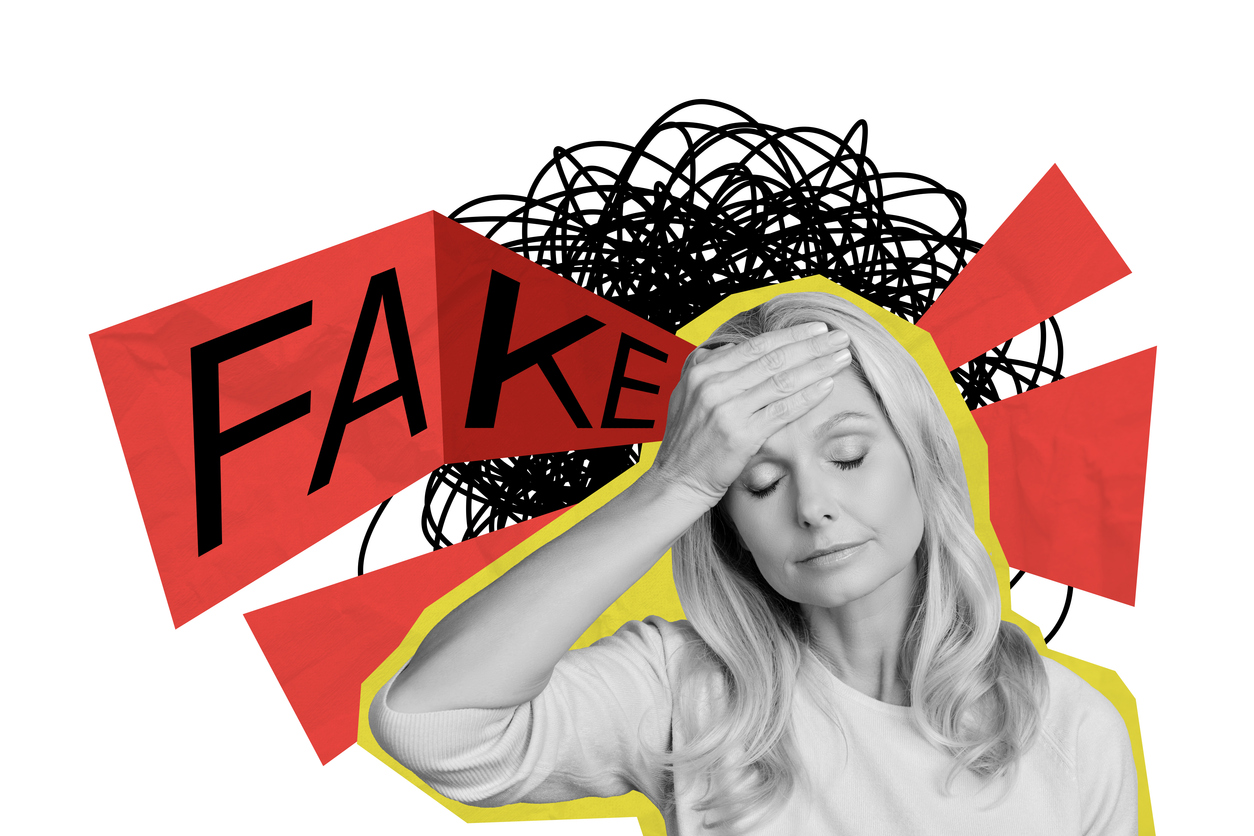
A recent special edition of The Economist explored Impostor Syndrome, confirming what many of us already experience firsthand: this quiet struggle is deeply embedded in today’s workplace. Not that I needed external validation. I see it regularly in my work. Different industries, different levels of seniority, different personalities — yet the same underlying tension emerges again and again.
Highly capable professionals confide in me about a persistent inner voice that questions their legitimacy. It whispers — sometimes it shouts — that they are not truly up to the task, that they were hired by accident, that their success is somehow a misunderstanding. Entrepreneurs tell me they fear their company was born out of reckless boldness rather than competence. Executives dread the moment someone will “finally realize” they are not as capable as they appear.
Externally, they project composure. Internally, they are exhausted. It takes extraordinary energy to look confident while suppressing the fear of being exposed as a fraud. That silent effort drains attention and creativity — resources that could be invested far more productively elsewhere.
The Hidden Companion of High Performers
What is striking is that this feeling of “never quite enough” rarely appears out of nowhere. It is often the shadow side of a performance-driven education and professional culture. From an early age, we are encouraged to aim higher, push harder, outperform expectations, and constantly improve. Achievement becomes the baseline. Satisfaction remains elusive.
The bar keeps moving, and whatever we accomplish quickly feels insufficient. The very mindset that fuels excellence also plants the seeds of chronic self-doubt.
And here is something equally important: you are not alone in this. A significant number of the people you admire most are wrestling with the same internal dialogue. You simply do not see it, because they hide it just as carefully as you do. Impostor Syndrome tends to visit those who care deeply about their work, who set high standards, and who strive to contribute meaningfully. In that sense, it may say more about your ambition than about your inadequacy.
A Signal of Growth, Not Proof of Fraud
Interestingly, Impostor Syndrome often surfaces at very specific moments: before taking on a stretch assignment, before stepping into a new leadership role, before launching something bold, or before navigating unfamiliar territory. It rarely appears when we are comfortably operating within our existing competencies.
That pattern is revealing.
The feeling may not signal incompetence; it may signal growth. It tends to arise precisely when we are expanding our perimeter.
The real difficulty is not that the feeling exists. The difficulty lies in carrying it unconsciously — like a backpack filled with stones — investing enormous energy in managing the discomfort rather than directing that energy toward meaningful projects.
Unmasking the Inner Voice
At some point, it becomes necessary to turn around and examine it more closely. Whose voice is this, really? Where did it originate?
Many high-profile professionals discover that their harshest inner critic echoes comments heard decades earlier — from a teacher, a parent, a peer. Some remarks were openly critical; others were framed as protection or motivation. The objective is not to assign blame but to create separation. Those voices belong to the past. They do not have authority over your present.
Does Impostor Syndrome ever disappear entirely? Probably not. As long as you are ambitious, curious, and willing to stretch beyond your comfort zone, it may resurface from time to time. But it does not have to paralyze you. It can become something else — a signal that you are entering territory that matters, that you are evolving, that you are playing a bigger game.
Seen through that lens, Impostor Syndrome is less an indictment and more a compass. It points toward growth. And perhaps the presence of that discomfort is not evidence that you do not belong — but proof that you are expanding into your next level.