3 Reasons why your Career Transition is Stalling (And How to Get Back on Tracks)
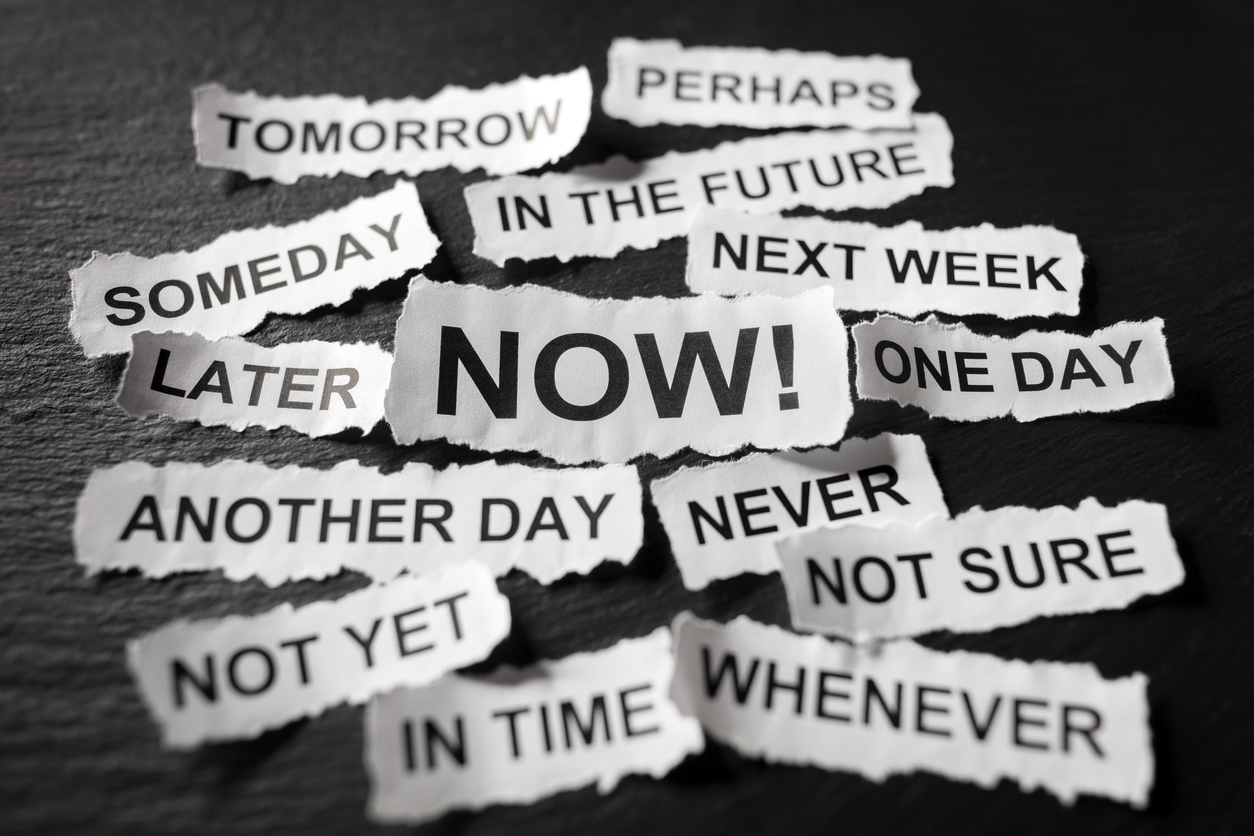
Congratulations — you’ve decided to take charge of your future.
You have the experience, the skills, and the desire to move toward a new professional chapter. So why does everything suddenly feel harder than expected? Why are you feeling stuck, discouraged, or drained? What happened to the motivation that once felt unstoppable?
Career transitions rarely unfold in a straight line. In this article, I explore three common reasons why a career change can stall — and how to regain momentum.
1. Do you lack flexibility?
We rarely give enough credit to the power of having a plan — and sticking to it. I am a big believer in planning. That said, real life has a tendency to interfere.
Especially during a career transition, unexpected events are inevitable. Resistance shows up. Doors close. Opportunities shift. The key question becomes:
Is this a temporary hurdle — or a signal to reassess direction?
Life doesn’t pause while we redesign our careers.
Perhaps your partner receives an unexpected job offer abroad.
A promising lead falls through.
A baby arrives.
Health issues demand attention.
Or an unforeseen opportunity suddenly appears.
Whatever the situation, the challenge is to adapt without losing sight of your deeper intention.
When you are clear on your values — what truly matters to you — flexibility becomes easier. Your vision acts as a compass. You may adjust the route, but you don’t lose direction.
When you stay anchored in your why, you become less attached to the how. And this is often where new, unexpected opportunities emerge.
2. Are you feeling lonely?
Career transitions can be surprisingly lonely — even when your life is full.
You may have a supportive partner, family, and friends. You’ve shared your plans and received encouragement. Yet day after day, you find yourself alone with your laptop, navigating uncertainty and self-doubt.
Motivation has a limited lifespan. Discipline eventually gives way to anxiety.
This is normal — and it’s also a sign that you shouldn’t do this alone.
What helps enormously is connecting with people who understand what you are trying to build. Peer groups, professional communities, alumni networks, entrepreneur circles, training cohorts, mastermind groups — both online and in person — can radically shift your energy.
When you find your tribe:
-
You gain perspective and feedback
-
You exchange expertise and feel useful again
-
Your confidence grows through connection
-
Your network expands organically
-
You return to your project with renewed clarity
Career transitions thrive in community. Isolation weakens momentum.
3. Are you stuck in a mental pit?
You started out like a champion, tackling the first steps of your transition like the kick-ass professional you are. Then things started to slow down, hurdles began to accumulate, and your energy started lacking. Self-doubt and guilt are center-stage, draining your emotions and clouding your skies. Positive thinking doesn’t help when the fear of failure is running the show.
The first truth to keep in mind: A career transition always takes more time than expected. Resistance is what you meet most, starting with your own human inclination to cling to the status quo. A change of perspective is needed.
The prescription? Radical honesty and self-compassion. Radical honesty means taking a 360° look at your current reality — without judgment. Revisiting earlier decisions. Checking whether your goals still reflect who you are today. Acknowledging how far you’ve already come.
Self-compassion means recognizing that at this stage of life, you no longer need to prove that you can overachieve. You already did.
Now the invitation is to become a better achiever — one who values emotional and physical health as much as professional success.
Sometimes progress doesn’t mean choosing between “all or nothing.” It means creating transitional phases, parallel paths, or temporary arrangements that restore energy and open space for clarity.
A Final Thought
Career transitions are not linear. They are deeply human processes — shaped by values, identity, fear, desire, and timing. If your transition feels slow or confusing, it doesn’t mean you’re failing.
It may simply mean you’re in the middle of redefining your second act.
The First Step To Designing a Life You Love is Clarity
Claim your personal discovery call with Alexandra to get clear on what exactly is holding you back from transitioning into the career of your dreams and how to get 'unstuck'.
 Alexandra Humbel Coaching
 Alexandra Humbel Coaching

 Alexandra Humbel Coaching